
Rave Travel
05
rave travel
2020
rave travel: a travel & even booking website
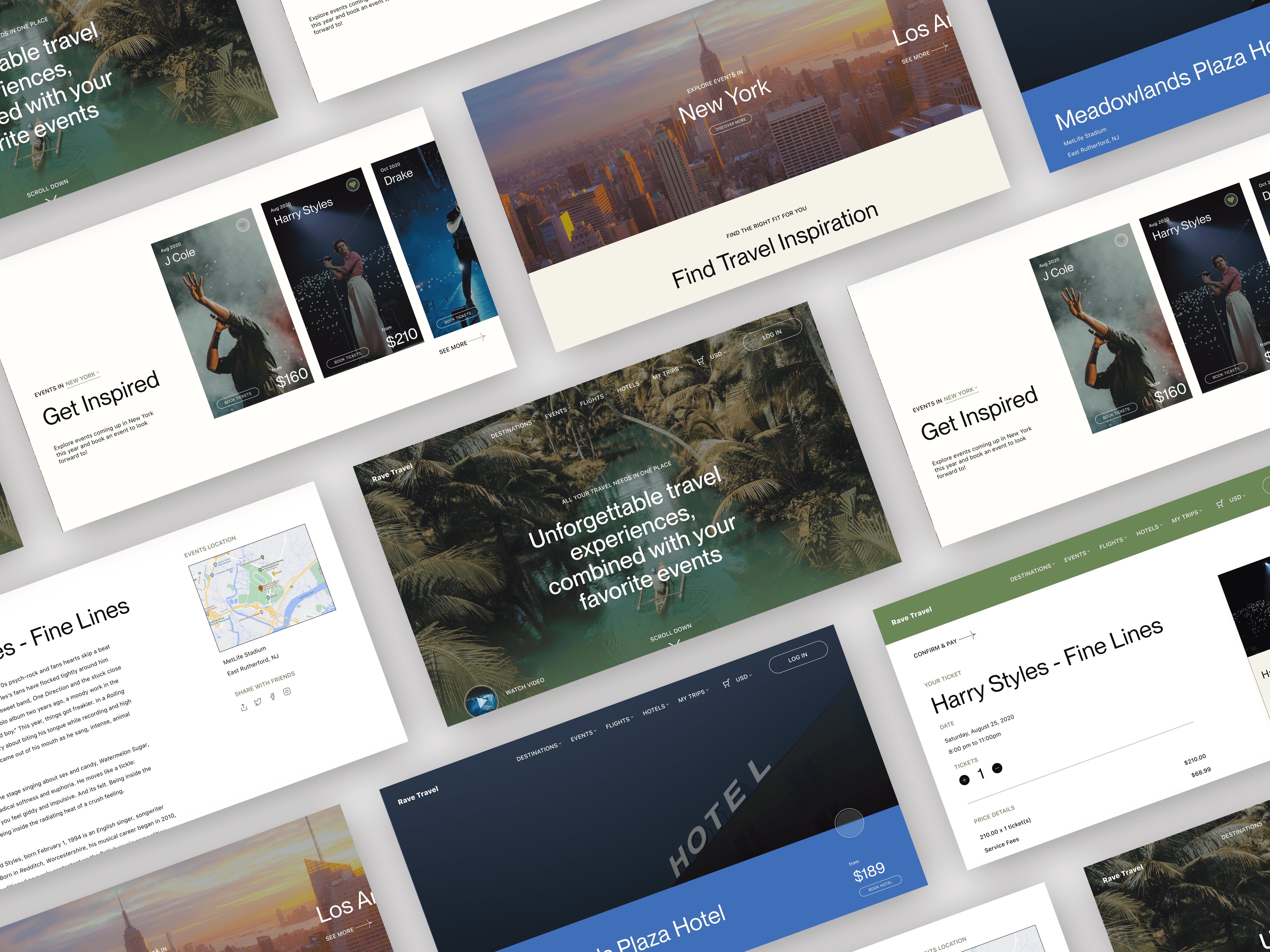
Rave was an early-stage startup looking to build a web platform that enabled users to purchase event tickets, book air travel, and make hotel accommodations – all from one place. Through partnerships with event ticketing outlets, major airlines, and hotels, Rave was able to provide users with access to a broad array of options and discounts. Rave’s main goal was to make it easy and affordable for customers to book one-of-a-kind travel experiences.
Client:
Student Project
Role:
Timeline:
4 weeks
With:
my role
As the UX/UI designer on the project, my role was to design the user interface of a responsive web platform for Rave Travel that differentiated the brand from its direct competitors. I was tasked with creating an engaging and interactive site that drew attention to important conversion points and cross-selling opportunities.
Fig. 01 - Video Walkthrough
the user research
We started with a visual competitive analysis and user interviews with Rave Travel customers. Ultimately we found our niche with a clean design and photography heavy website, something Rave’s competitors were sorely missing.
The wireframes place emphasis on personalized experiences. Suggestions for events, lodging, and flights are curated based on the user's interests and traveling habits, making trip planning convenient. The simple information architecture allows users to take action and accomplish tasks efficiently. The goal of the UI design was to add visual intrigue to the minimal interface.
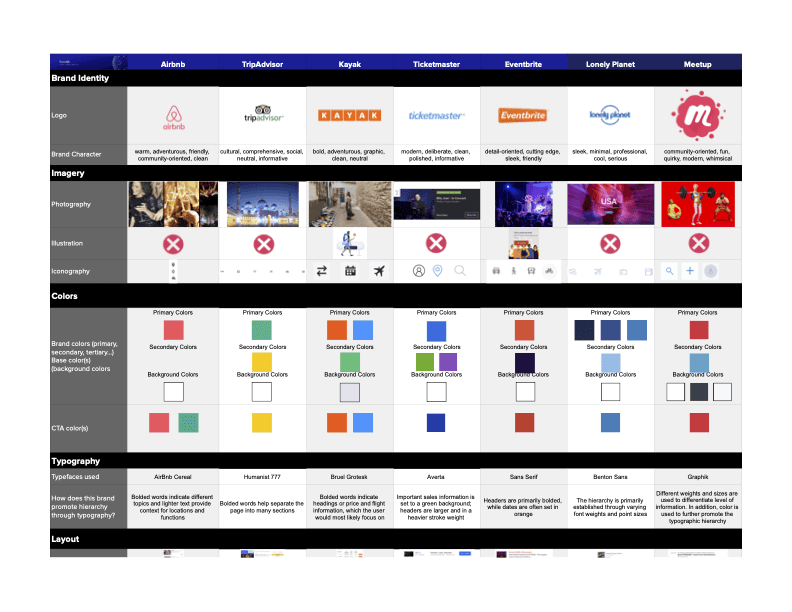
Fig. 02 - Competitive Analysis
Key Takeways
Key Insight One:
Many competitors do not offer consistent experience between mobile and desktop versions. For example, Meetup and Kayak are inconsistent between mobile and desktop websites, while TripAdvisor remains consistent throughout
Key Insight Two:
There's a wide spectrum in the use of negative space between many different competitors. For example, Airbnb and Lonely Planet use a generous amount of negative space throughout the user interface, but TripAdvisor has a dense arrangement of UI elements
Key Insight Three:
Some competitors have unmemorable brand personality and consequentially a minimal brand voice. For example, Meetup distinguishes itself through the use of bold colors and quirky photography whereas Ticketmaster has a bland and undifferentiated product
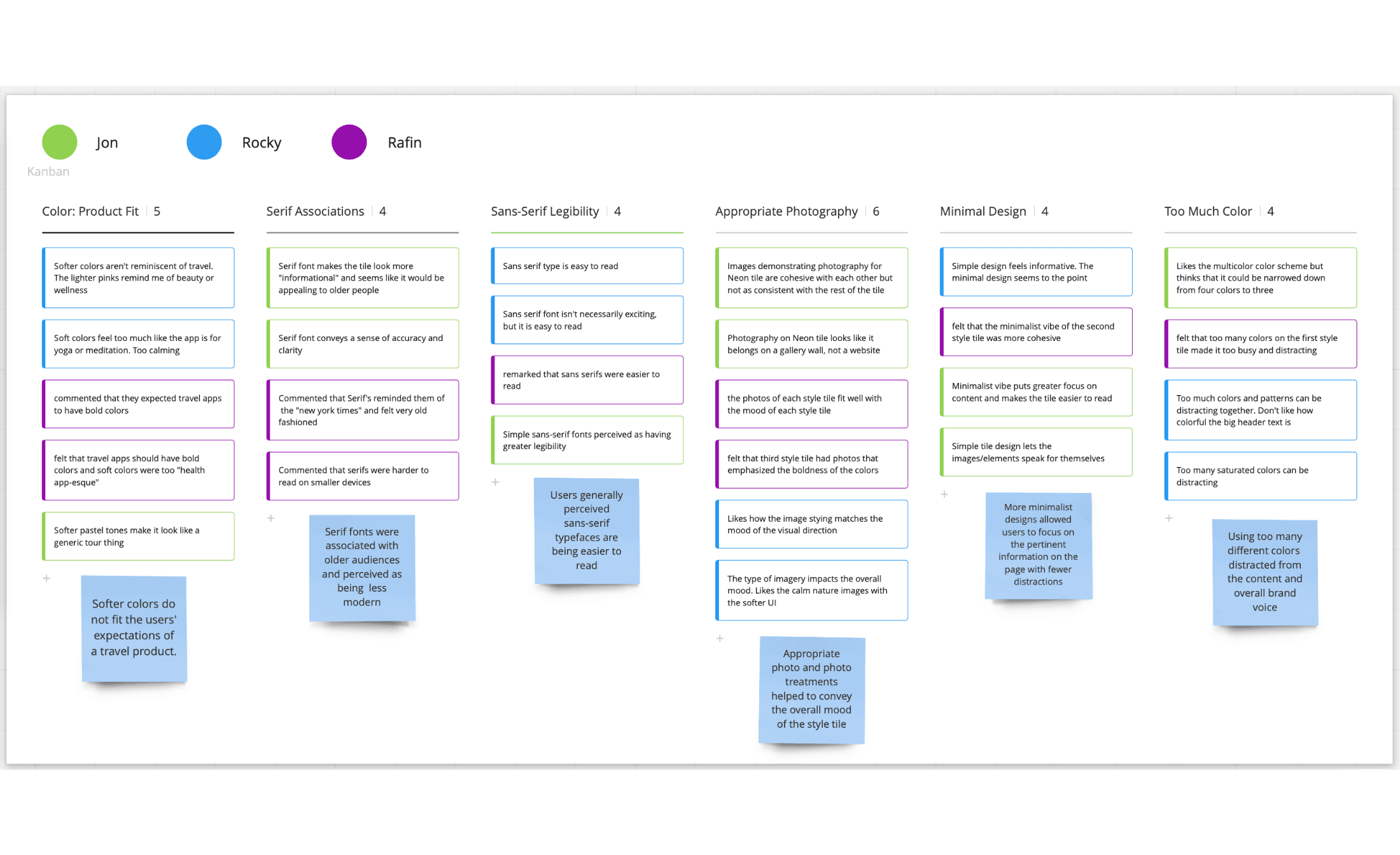
Fig. 03 - Affinity Diagrams
the process
The client wanted a distinct visual identity that would appeal to a more sophisticated audience.
The resulting visual design took cues from travel guide websites to add a sense of adventure to the minimal design. In the desirability testing, users reacted favorably to the fresh look. They agreed that the style tile represents a exciting, new take on a travel product — one that distinguished Rave from its competitors in a saturated travel market.
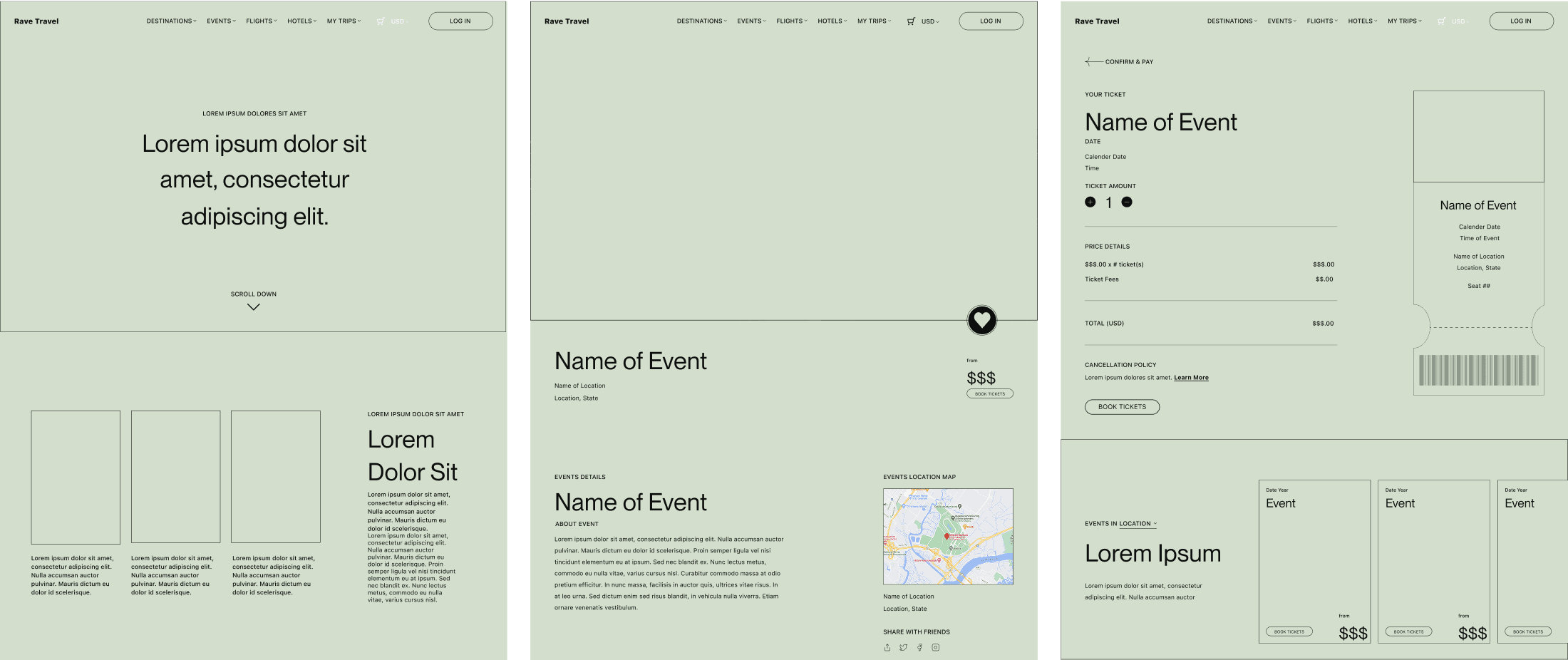
Fig. 04 - LoFi Wireframes
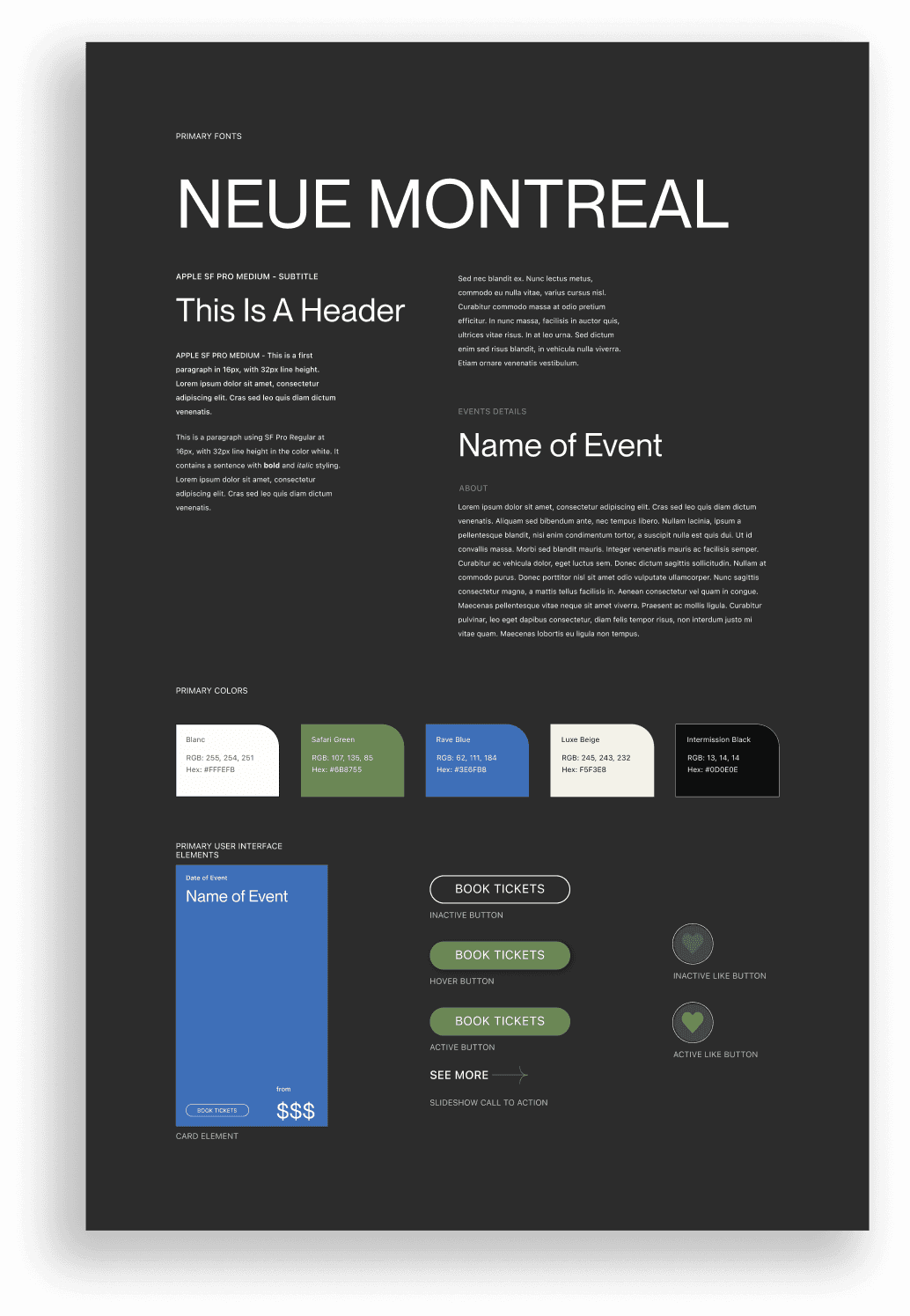
Fig. 05 - Style Tiles
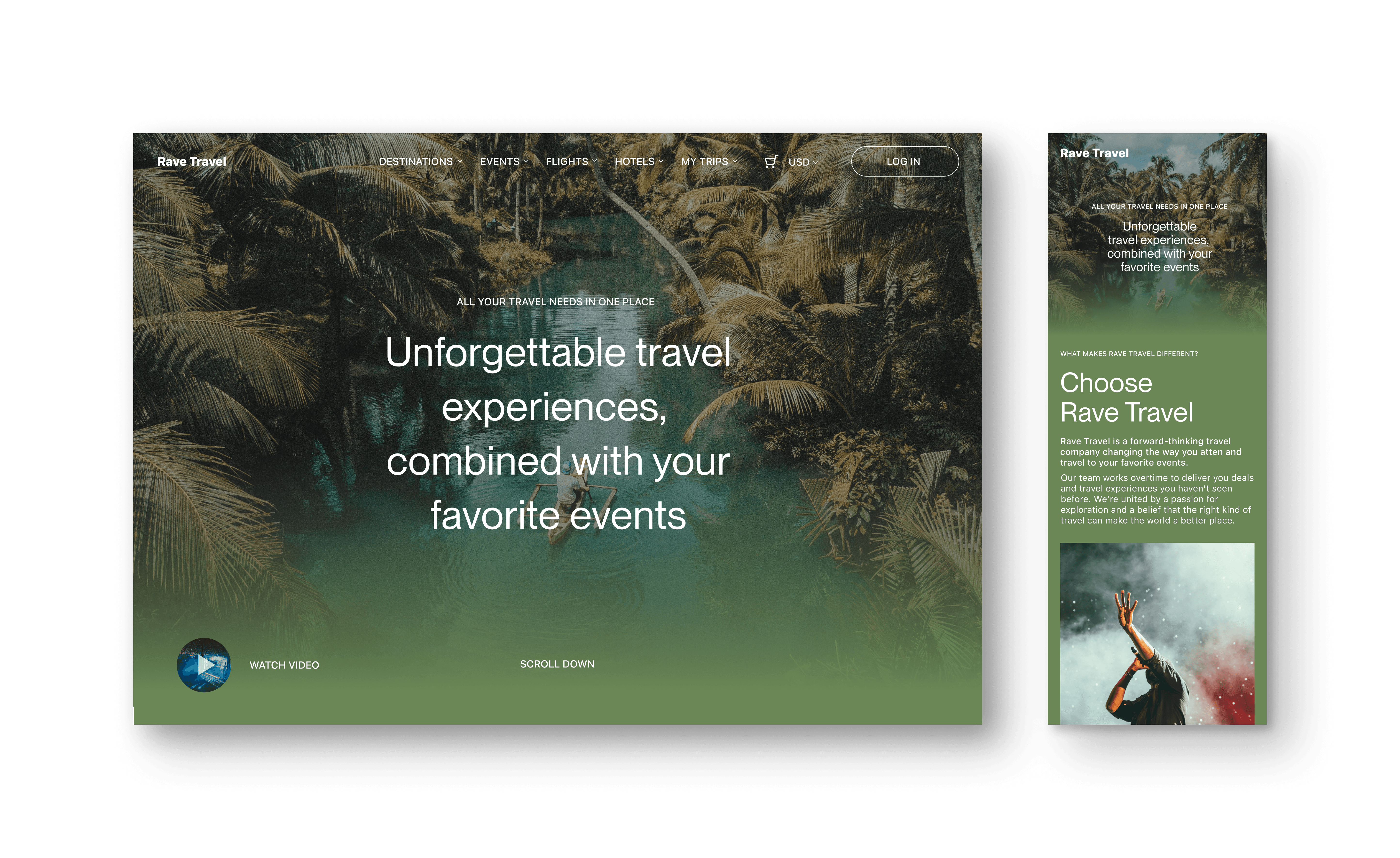
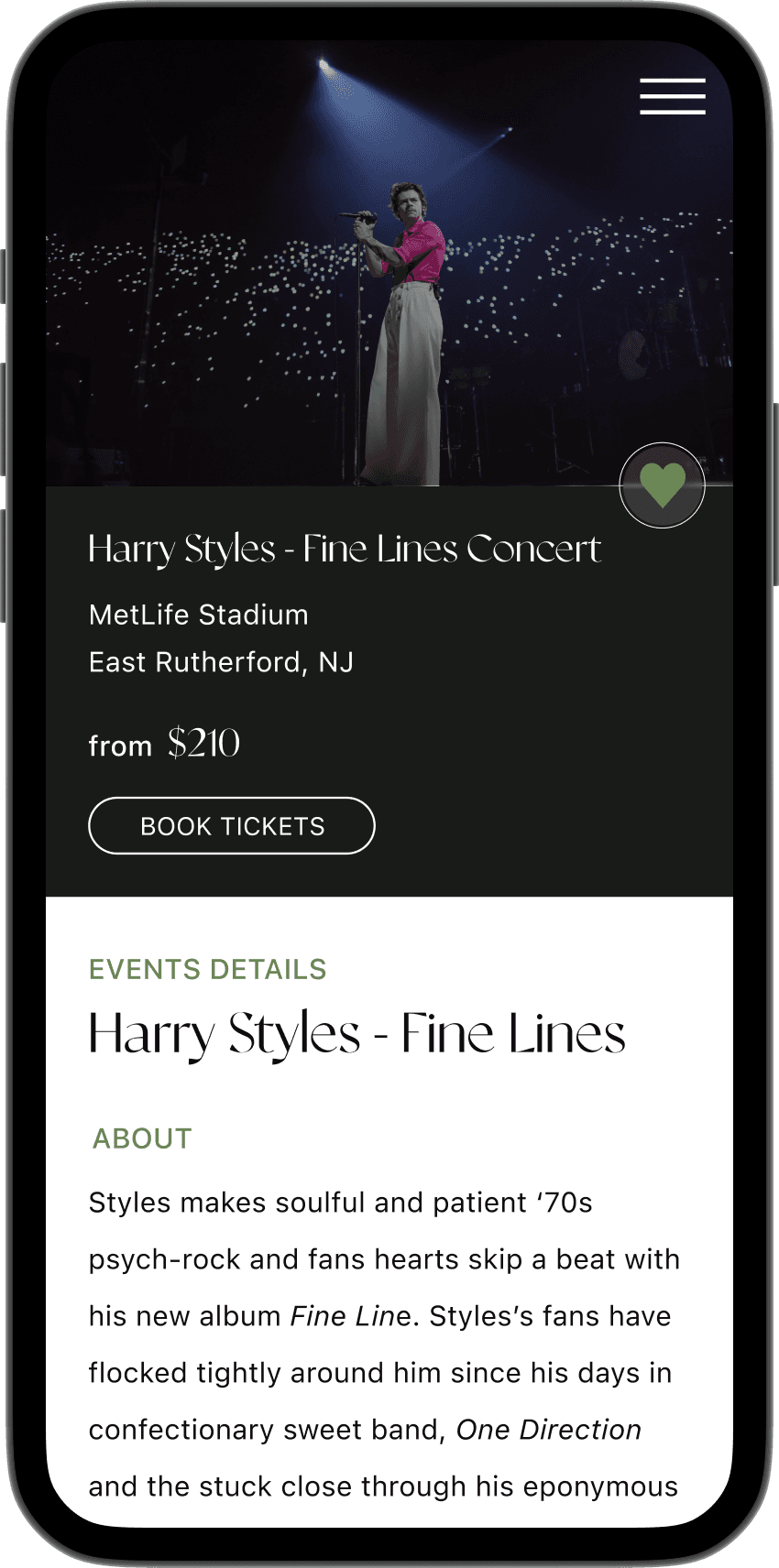
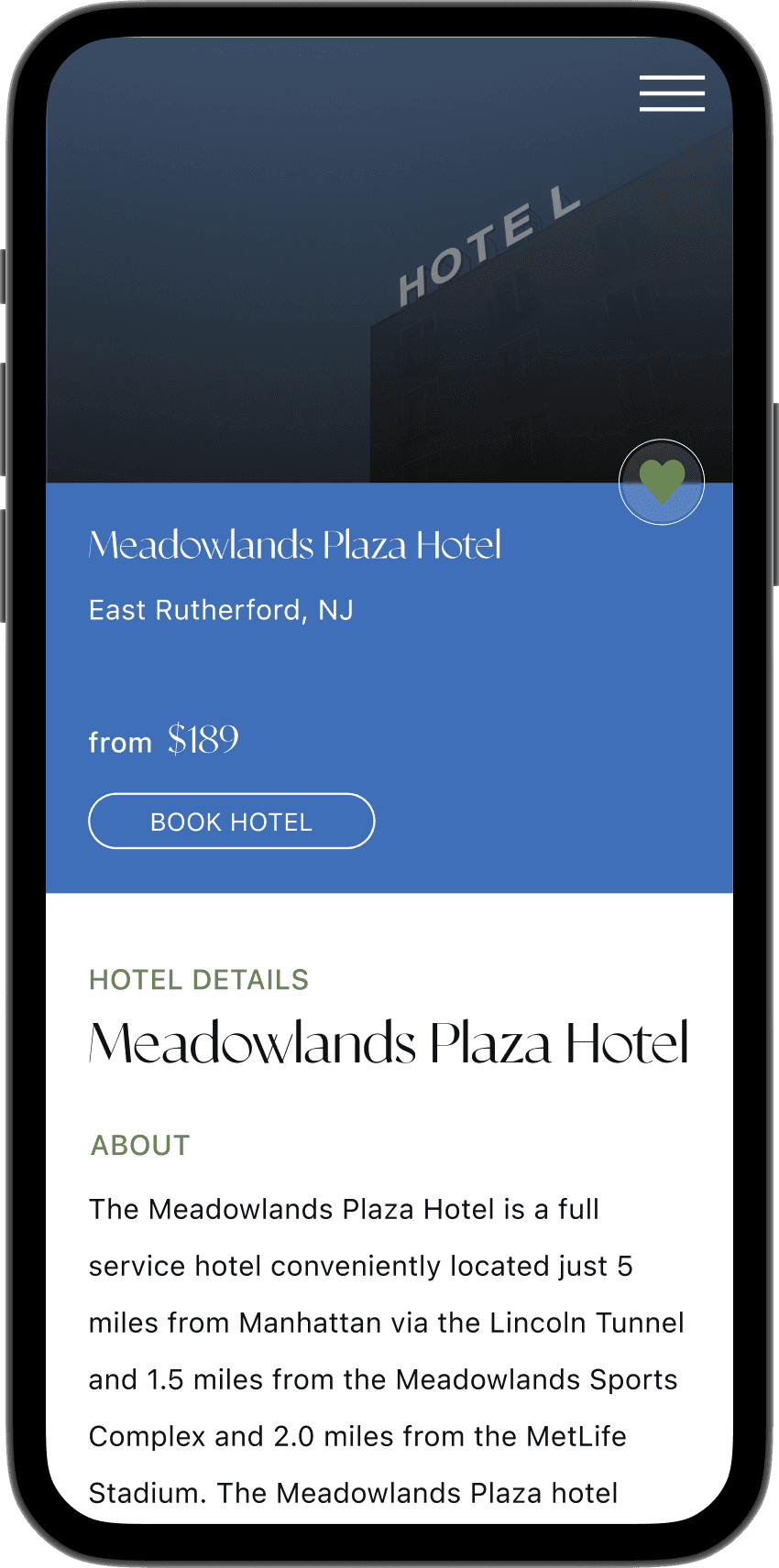
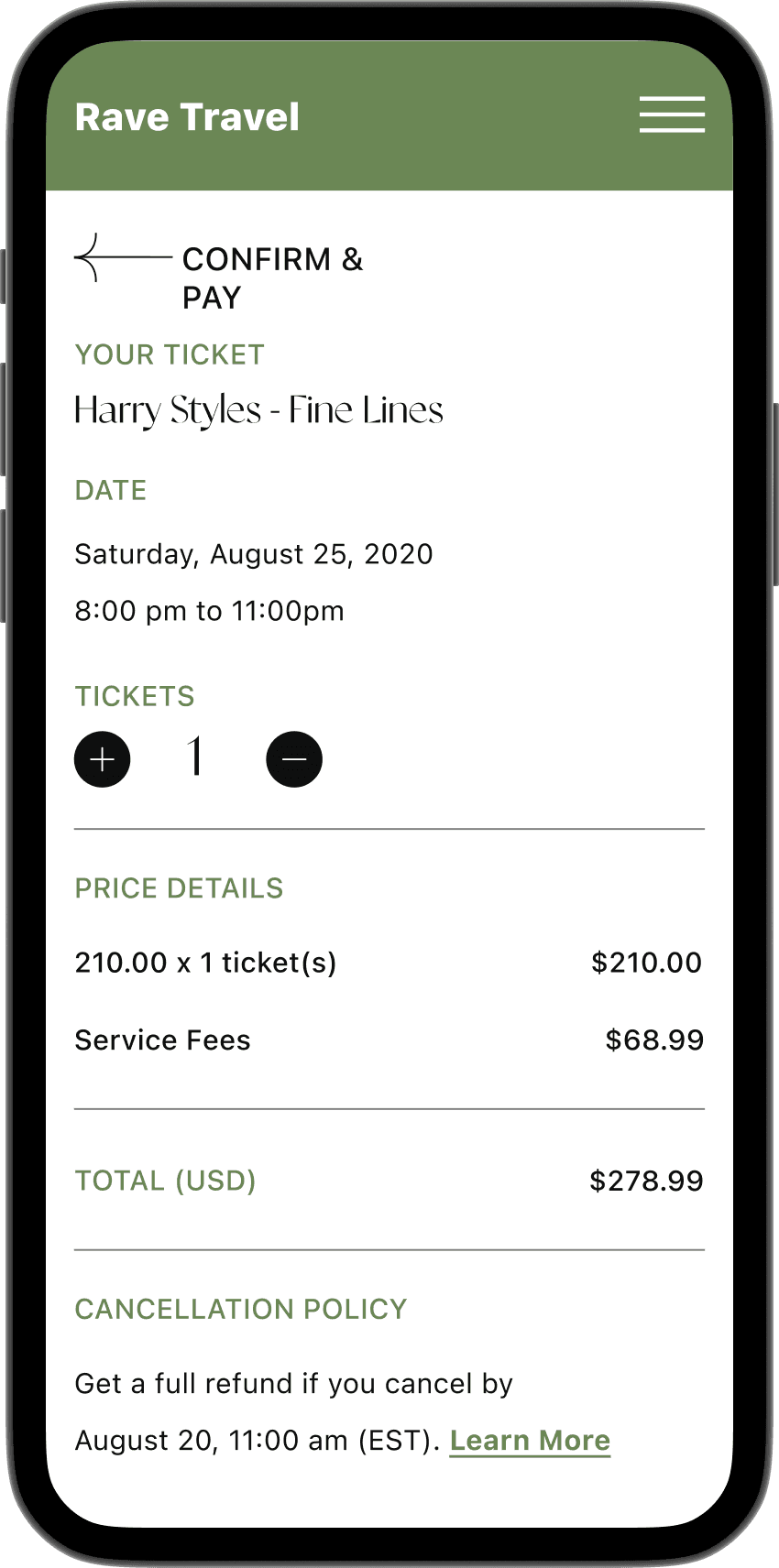
Fig. 07 - Rave Travel Mobile Screens
The conclusion
Once the designs were done, our team conducted usability testing on the prototypes. They were given two tasks. Task one was to freely move around the website. Task two was to add an event to the cart.
After task 1, there was a consensus among the interviewees that the first task was easy to complete. Users commented that the easy to recognize buttons and clear labelling helped guide them easily through the task flow. One user noted that the task flow was easy to follow as it was something they were used to doing on ticketmaster.
Task 2 was comparatively more difficult for users. Even though the two tasks required similar amounts of user input/action, the time on task was also 8.35s longer for Task 2. One participant noted that he had a difficult time remembering the exact details of this task, especially the check-in and check-out dates for the hotel. The others noted that although a little complicated initially, the rest of the task followed expectations.
Further Recommend ations
Build out more methods to accomplish this adding items to cart in future iterations
In future iterations incorporate elements that suggest a more personalized experience for the user
Building out multiple ways to add a hotel to to the cart in future designs
Adding further information about amenities that are offered by hotels
Adding further information about the types of hotel rooms and pricing for each